Showing posts with label audiology. Show all posts

Monday, August 15, 2022

Sound Advice - Children Benefit from Hearing Aids during Summer Break!


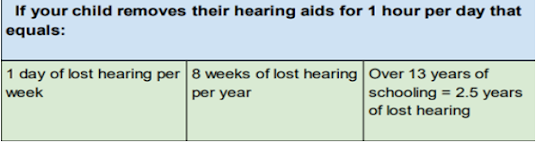
 As summertime often brings a welcome “break” from school-year routines and structured extra-curricular activities, it may be tempting to veer away from their typical schedule of daily, full-time hearing device use. Below is a list of reasons to continue consistent hearing aid use throughout the summer to cure some of the “summertime and back-to-school blues.”

  • Children who are hard of hearing and wear their hearing aids full-time have grammar and vocabulary skills similar to children with normal hearing. Children who do not wear hearing aids consistently, regard-less of degree of hearing levels, are at risk for poorer spoken language abilities.
  • Device use increases your child’s potential to “overhear” and learn new vocabulary and social communication skills over the summer, including manners and other social “rules.” This is important because approximately 80-90% of what children learn occurs through incidental, casual and passive experiences.
  • Your child will be more prepared for the upcoming school year. You won’t have to “find” your child’s hearing aids and you and/or your child are more likely to detect a broken or malfunctioning device or poorly fitting earmold. These issues can then be addressed before the beginning of the school year.
  • Expecting consistent hearing aid use will promote independence and self-confidence. It teaches your child that they are expected to participate fully in family conversations; it is their responsibility to make sure they are gathering and understanding the information they need.
  • Current hearing devices are made to be worn under almost all conditions - with state-of-the-art technology to protect them from dirt, dust, sweat, humidity, and even short submersions in water. There is no need to remove the hearing aids for most summertime activities! But remember: Don’t swim with them. They won’t last long under water.
  • Your child may be less tired and experience reduced listening fatigue because they hear better when they are wearing their hearing aids. Children who experience listening fatigue may be more irritable or cranky, moody, frustrated, bored, and distractible.
  • Your child may be able to hear television, videos, movies, and music better and at softer levels with their devices. During group viewing and listening activities with typical hearing listeners, this may allow a lower, more tolerable and safer volume for everyone.
  • Your child may be safer when wearing their hearing technology. They may be able to hear warning and safety sounds better and from a longer distance (i.e., sirens, vehicle horns, fire and smoke alarms),
  • Your child may be more likely to hear the many sounds of nature as they enjoy the outdoors (i.e. crickets chirping, cicadas clicking, birds singing, toads croaking).

Monday, May 23, 2022

Sound Advice from Audiology - The Impact of Hearing Loss


 Language

Most language is learned incidentally, or through example. Direct teaching of language is sometimes necessary for children who are deaf or hard of hearing as incidental learning may not be as accessible. For verbal language, consider the child’s ability to access the speech spectrum and different listening environments. For visual language, ensure the child has access to rich examples of language in the environment. Children who are deaf or hard of hearing may require additional support to develop certain skills in spoken English. These include abstract words (before, after, equal to, etc.); understanding words that have more than one meaning; word endings that give information about tense, singular versus plural, etc., and unspoken social "rules" such as turn taking, what to say or not say and when.
The IDEAL (Indiana Deaf Education and Assessments of Language) milestones document is an excellent resource to keep in mind what language skills develop at what ages – in English and American Sign Language as well as Spanish (EspaƱol).

Articulation

Often, children who do not have sufficient auditory access to certain speech sounds have difficulty producing those sounds. Children who are deaf or hard of hearing may produce speech sounds incorrectly and/or omit certain speech sounds. Often this leads to difficulty understanding what they are saying. For children using listening and spoken language, the ability to speak so that they are able to be understood by others is necessary to communicate and connect with other people. Audibility is key to natural development of speech sounds. Specialized coaching is needed to highlight these speech sounds and teach the child to recognize and produce them properly. This training can help make their speech easier to understand.

Social-Emotional

Communication is needed to build healthy relationships. Adults must ensure that children who are deaf or hard of hearing can communicate with their family and peers. Understanding social-emotional milestones can help parents and professionals have accurate expectations. Deaf and hard of hearing children benefit from the chance to interact with other adults and children who communicate in the same way. Some children feel alone when they do not see anyone else who knows what it feels like to be deaf or hard of hearing. This can potentially lead to frustration, anger and even acting out. The opportunity to share experiences and learn from one another is helpful.

Cognitive

Missing or misunderstanding what people say can make it hard to learn new information. Children need to be able to learn to improve their reading and thinking skills. Children who are deaf or hard of hearing must have all of the same information as their hearing classmates. They may need extra time or different materials to make sure the information is clear. Sometimes, the cause of a child’s hearing loss may also cause cognitive delays. Some children have hearing loss and cognitive delays that are not related. When a child who is deaf or hard of hearing is being tested, it is important to keep their communication needs and challenges in mind.

Resources:

Central Institute for the Deaf– Considerations for choosing speech targets
Hands and Voices Parent Tip Sheets– Language and Social Development
IDEAL Parent Document– English and Spanish
Success for Kids with Hearing Loss – Impact of Hearing Loss and Speech Perception and Learning

Tuesday, February 8, 2022

Job Posting: Audiologist


Join our team!

The Indiana Department of Health is currently seeking an Audiologist within the Center for Deaf and Hard of Hearing Education. This position will act as a point of contact for the provision of technical assistance and support throughout the state.
This employee will provide direct services to families as well as collaborate with professionals throughout the state, assisting the center with the mission: To promote positive outcomes for all deaf and hard of hearing children through information, services and education. The Center is seeking professionals with experience providing pediatric audiological services, working with families, and collaborating with other professionals – sharing resources and expertise.

Audiologist

This position provides audiological services to children ages birth through school exit. The audiologist in this position will develop and provide resources to families and professionals as a primary point of contact for provision of technical assistance and support throughout the state. Travel is required, including travel with other staff members through the Center’s mobile unit- to ensure continuity of care, enhance likelihood of successful outcomes for children/students who are deaf and hard of hearing.
Job Posting: https://workforindiana.in.gov/job-invite/269883/

For further information about this position:
Contact Michelle Wagner-Escobar, Audiology Coordinator

Center for Deaf and Hard of Hearing Education
Indiana Department of Health
Mailing Address: 2 N. Meridian Indianapolis, IN 46204
(317) 232-7438 Phone
(317) 520-3301VP

Monday, January 24, 2022

Sound Advice on Listening Breaks


Listening is tiring!

Dr. Krista Yushow, an expert in educational audiology, shared considerations for helping deaf and hard of hearing children combat listening fatigue in the classroom at the second annual Topics in Pediatric Audiology Conference, hosted by the Center in Nov. 2021.

“When you are hard of hearing you
struggle to hear; when you struggle to hear you get tired;
when you get tired you get frustrated; when
you get frustrated you get bored;
when you get bored you quit”  - Pichora-Fuller (2003)

What is listening fatigue?

In order to understand speech, deaf and hard of hearing children must use more brain power for listening than other children. Their brain has to work harder to process the same information. This causes an increase in stress and eventually, fatigue!

Hearing Aids

Hearing aids improve listening and speech comprehension in quiet listening environments, which helps
decrease listening fatigue.
  • Encourage all day use of hearing aids, no matter the severity of hearing loss. Severity of hearing loss does not determine educational impact!
  •  Pick bright and fun colors to promote acceptance and pride in their identity.
    • Ask your audiologist for fun stickers to put on hearing aids
    • Check out hearing aid accessories, earrings, and charms on Etsy!

Personal Remote Microphone Systems 

  • Hearing aids provide excellent benefit when your child is close to the speaker. As distance and background noise increase, additional technology is needed to hear and understand speech.
  •  Direct microphones transmit the speaker’s voice directly to hearing aids, which help reduce the negative effects of distance and background noise.
  • Use in noisy environments like grocery stores or restaurants, or when your child is in a stroller in order to provide the best access to speech in all environments! 


Tuesday, November 9, 2021

Hearing Screenings and our Mobile Audiological Unit


It is that time of year when schools begin their hearing screenings of their students. 

If you are a Teacher for the Deaf (TOD), it is very important that you are a part of that follow-up. It is important to be a part of this process to be sure that families know what steps to take if their child is referred for additional screening/tests. 

Here at the Center for Deaf and Hard of Hearing Education you can connect with our team of Audiologists to have a hearing screening done for you child, for FREE!  To schedule an appointment or to learn more please contact them at: 317-232-7349. If you have a family that is too far from our location here in Indianapolis, you an work to schedule the mobile unit to come to your school district to help check on multiple students.

Click the video below to take a tour of our outfitted RV!


When you reserve the Mobile Unit to your school district, our Center staff will bring their expertise to you! School staff and community partners may join alongside to help address the needs of children who are deaf and hard of hearing, or have indicated that they needed to be screened additionally from your latest hearing screenings. Having the mobile unit and staff visit will address areas such as specialized early intervention services, educational audiology, classroom strategies, communication needs and technology. 

Our mobile unit is outfitted with a professional sound booth, audiology equipment for hearing testing, and troubleshooting hearing technology. It is also equipped with a consultation area to discuss options and opportunities with our professional and certified staff. 

While our Center will assist with the immediate needs the day of our visit, we will be equally focused on connecting children, families, and professionals to resources within your community for long-term support. 

The Mobile Unit

To schedule and learn more on how this would work in your community, please contact the Center:


Monday, October 18, 2021

Join us for a Virtual Conference - Topics in Audiology - Audiological Supports in Education and Early Developme

Click the above image to register for our conference!

About this event

Practical technology tips, connectivity considerations, and ways pediatric/clinical audiologists can support children and educators.

Keynote Speaker: Krista Yuskow, Au.D., R. AuD

Beyond Amplification

Clinical audiologists are not typically able to see the extensive effort of their fittings or mappings at work beyond the clinic walls. While a clinician’s window to their patients’ daily listening environments is limited to subjective feedback, educational audiologists have the unique opportunity of observing and addressing barriers to auditory access beyond hearing aids and cochlear implants. This session will explore some of those barriers and provide considerations and related strategies.

Other Presenters & Topics will Include:

Sarah Kiefer, MA Ed., Deaf Education Coordinator, Center for Deaf and Hard of Hearing Education

  • Indiana update on current educational trends for children who are deaf and hard of hearing.

Bethany Colson M.A., M.S.D.E., CCC-SLP, Executive Director, Center for Deaf and Hard of Hearing Education

  • Indiana Deaf Education and Assessments of Language (IDEAL) - What audiologists and other providers need to know.

Allison Soll, Au.D, CCC-A, Pediatric Account Manager, Oticon Inc.

Evan Claytor, Au.D., Account Manager Children's Hospitals & Schools, Phonak US

  • Assistive listening technology options for the classroom, featuring presentations by Oticon and Phonak.
  • Practical technology tips and connectivity considerations in the classroom and ways pediatric and clinical audiologists can support children and educators.

Cindy Lawrence, MA-CCC-A, Early Intervention Coordinator, Center for Deaf and Hard of Hearing Education

  • Indiana early intervention for children who are deaf and hard of hearing - Benefits of audiologists collaborating with other EI providers.

Suzanne Foley, M.A., Au.D., CCC-A Director, Indiana EHDI Program

  • Indiana EHDI’s Best Practice Diagnostic Follow-up Guidelines.


We hope to see you there!


Monday, September 6, 2021

Sound Advice from Audiology - Tips and Tricks


Tip #1: Know your IP Rating

Like your smartphone or laptop, hearing aids must be kept dry. Curious how protected your hearing aids are? Check your IP rating in your user manual before you head to the beach. Every hearing aid has an IP rating with two digits. The first number represents protection from dust, sand and debris (1-6). The second number represents protection from water, sweat and moisture (1-8). A higher IP rating indicates better protection. Even a hearing aid with the highest IP rating (68) is not indestructible and requires extra care over the summer.


Tip #2: Pick your perfect dryer ...and use it!

Hearing technology is water resistant, not water proof. Moisture (water, sweat, etc.) is harmful to cochlear implants and hearing aids. Summer is an important time to check your supply and ensure your drying kit is ready for use. Drying cases come in a variety of shapes and sizes. Some drying cases use disposable desiccant beads. Other drying cases are electric and circulate air around the hearing aids or use a UV light to kill bacteria. If you have significant difficulty fighting moisture or live in a humid climate, consider investing in an electronic dehumidifier. 


Tip #3: Daily Checks - is it functioning?

Daily checks are especially important in the summertime. Devices may still power on even if they have water damage. Simply turning hearing aids on does not guarantee a clear signal. Visually inspect the hearing aids and use your listening stethoset to check for signs of moisture every day. Listen for static, indicating the device requires a repair. Wipe the hearing aid with a cloth after each use. Check the earmold tubing for condensation.  Use the tubing blower to dry any moisture. Open the battery door and look for corrosion. Clean the battery contacts and leave the battery door open overnight.


Tip #4: Utilize Water Accessories ...if available

Hearing aids and cochlear implants are not waterproof. However, special accessories are available for additional protection. Ear Gear is a spandex sleeve designed to absorb sweat, water, rain, and debris for an extra level of protection. Even with accessories, hearing aids cannot be worn while swimming.  Water-wear can be added to a cochlear implant, making the device completely waterproof and functional, even while swimming. Each accessory is device-specific. Contact your managing audiologist to select the appropriate accessory for you!


Monday, February 15, 2021

Sound Advice: Audiology

 Innovations in Hearing Aid Technology

Bluetooth

Bluetooth technology allows hearing aid users to stream content directly from their device to their hearing aids. The listener has access to both environmental sounds and appropriately       amplified streamed audio.

Pros: connects to personal and school devices (i.e. phones, tablets) without intermediary devices.

Cons: battery consumption, dependent on reliable Bluetooth connection.

Rechargeable

Rather than using disposable batteries, rechargeable hearing aids are docked in a charging unit overnight. Built-in batteries cannot be replaced by the user; shelf-life is estimated to be               approximately 5 years.

Pros: environmentally friendly, protects young children and pets from battery toxicity.

Cons: dependency on charging unit, users may forget or be unable to charge hearing aids every night.

Accessibility

Pediatric hearing aids are equipped to connect to special microphones allowing the student to stream the speaker’s voice directly to their hearing aids (i.e. FM/DM systems and remote             microphones).

Pros: increased audibility from a distance or in noisy environments. Connect to non-Bluetooth    devices.

Cons: teachers need to remember to turn the microphone off/mute when appropriate.

Smart Phones

Manufacturers have released smartphone apps compatible with their products. App may include battery life estimates, volume/program adjustments, wear-time monitoring, and Find My Hearing Aid features.

Pros: allows more user control and information.

Cons: newly developed, some “bugs” remain (i.e. variable accuracy, unreliable pairing with      hearing aids).


Monday, November 9, 2020

Sound Advice: Impact of Face Coverings on Communication Access – Recent Studies

 Studies investigating the impact of facial coverings on auditory and visual access to communication have been limited. Refer to two recent studies summarized below to gain insight into the variability of acoustic effects of face covering options and the potential impacts of these effects on speech understanding.

· The Illinois Augmented Listening Laboratory examined the decrease in speech signal caused by different facial coverings (cloth, medical, and transparent masks and shields) and the effect of a microphone placed at different positions (next to the mouth, cheek, forehead, lapel), with     various masks.

· All masks decreased the speech signal above 1000 Hz; substantial variation occurred in results between mask types, especially for cloth masks with different materials and weaves (thickness was less important than weave, as loosely woven fabrics were better than tightly woven ones).

· Transparent masks (shields and cloth masks with clear windows) provided poorer acoustic performance compared to medical and cloth masks.

· Using a microphone placed at the lapel or forehead was most effective to capture sound deflected by masks to the side of the face (especially shields and masks with clear windows). Talkers wearing masks can improve transmission of high-frequency sounds by wearing a microphone.

The Effects of Face Coverings and Remote Microphone Technology on Speech Perception in the Classroom, The Moog Center for Deaf Education

 · The Moog Center for Deaf Education studied how various facial coverings (cloth mask, cloth mask with window, and clear shield) with and without a personal remote microphone (RM) digital modulation (DM) system impact speech understanding in a   classroom environment.

· Use of an RM system significantly improved speech  understanding when used with the cloth mask and face shield, but resulted in poorer performance with the fully clear mask (ClearMask).

· Functional listening assessments can be easily completed in the classroom to determine the best listening option for each child.


Monday, October 26, 2020

From the Director: Taking the High Road

 As our Center ensures availability of our consultations and resources statewide, we are    embarking on a new journey: a mobile unit!

Our mobile unit will be equipped with an audiology soundbooth and equipment as well as a consultation area. We will be taking this unit to a variety of locations throughout Indiana—planning each visit based on the specific needs of that community.

We will partner with local entities—schools, health departments, nonprofit organizations, and universities—coming alongside those professionals in the community. We will collaborate on individual children/students as well as processes and systems in which our staff can be of               assistance.

Our unit will be on the road at the end of 2020, and we look forward to the opportunity to connect with many of you as we plan for this new venture!


Monday, October 5, 2020

Sound Advice: Face Masks

Due to the current COVID-19 pandemic, many people are following health guidelines to wear face masks while in public places. These face masks can impact our communication with one another – particularly for individuals who are deaf and hard of hearing.

HOW MASKS MAY IMPACT COMMUNICATION

· Different fabrics and styles of masks distort speech.

· Individuals may not know when others are speaking and may have difficulty understanding what they are saying.

· Masks cover facial expressions that convey grammar and meaning and show mouth morphemes for ASL.

· Masks may get tangled with hearing aids and implants sitting behind the ears and may pull the devices off when removed.

· Masks hide facial expressions that may alert communication partners to  communication breakdowns and confusion.

 HOW INDIVIDUALS WHO ARE DEAF AND HARD OF HEARING MAY BE AFFECTED

· Increased mental exertion required to achieve effective communication

· Increased anxiety and frustration due to miscommunication

· Increased feelings of isolation in group settings

 WHAT YOU CAN DO

· Consider using clear face shields or masks with clear cut-outs instead of traditional masks (see resources below).

· Consider using behind-the-head hooks, headbands, etc.

· Consider masks that tie behind the head instead of the ears.

 HOW TO IMPROVE COMMUNICATION

· Maintain eye contact during conversation.

· Speak as slowly and clearly as possible without changing the intonation and quality of your natural speech.

· Continue consistent use of prescribed hearing technology.

· Alternative forms of communication such as dictation or translation apps may provide a speech to text option

· Consider attaching a directional microphone to your smartphone to improve accuracy and cover greater distance to pick up a speaker’s voice when using speech to text apps

 SPEECH TO TEXT APPS

Ava (can type back, many languages) (iOS, Android)

Google Live Transcribe (can type back, many languages) (Android)

Microsoft Translator (can type back, can translate, many languages) (iOS, Android, Windows)

Otter.ai (English only) (iOS, Android)

Web Captioner (many languages) (universal web page)

 ADDITIONAL RESOURCES

Phonak Blog: Masking Dilemma

Hearing Review: Masks & Speech Understanding

National Deaf Children's Society: Impact of Masks

National Association of the Deaf: Communication Access 

Center for Deaf and Hard of Hearing Education: General Considerations for Masks & Shields